Dzintari concert hall
Dzintari concert hall
- Turaidas iela 1, Dzintari
- https://www.dzintarukoncertzale.lv/
- +371 67762092
- info@dzintarukoncertzale.lv
- 56.9778859,23.8120224
- Architecture
- Today open10:00 - 17:30
- Skatīt šeit
1.January - 31.December
- Monday10:00 - 17:30
- Tuesday10:00 - 17:30
- Wednesday10:00 - 17:30
- Thursday10:00 - 17:30
- Friday10:00 - 17:30
- Saturday10:00 - 17:30
- Sunday10:00 - 17:30


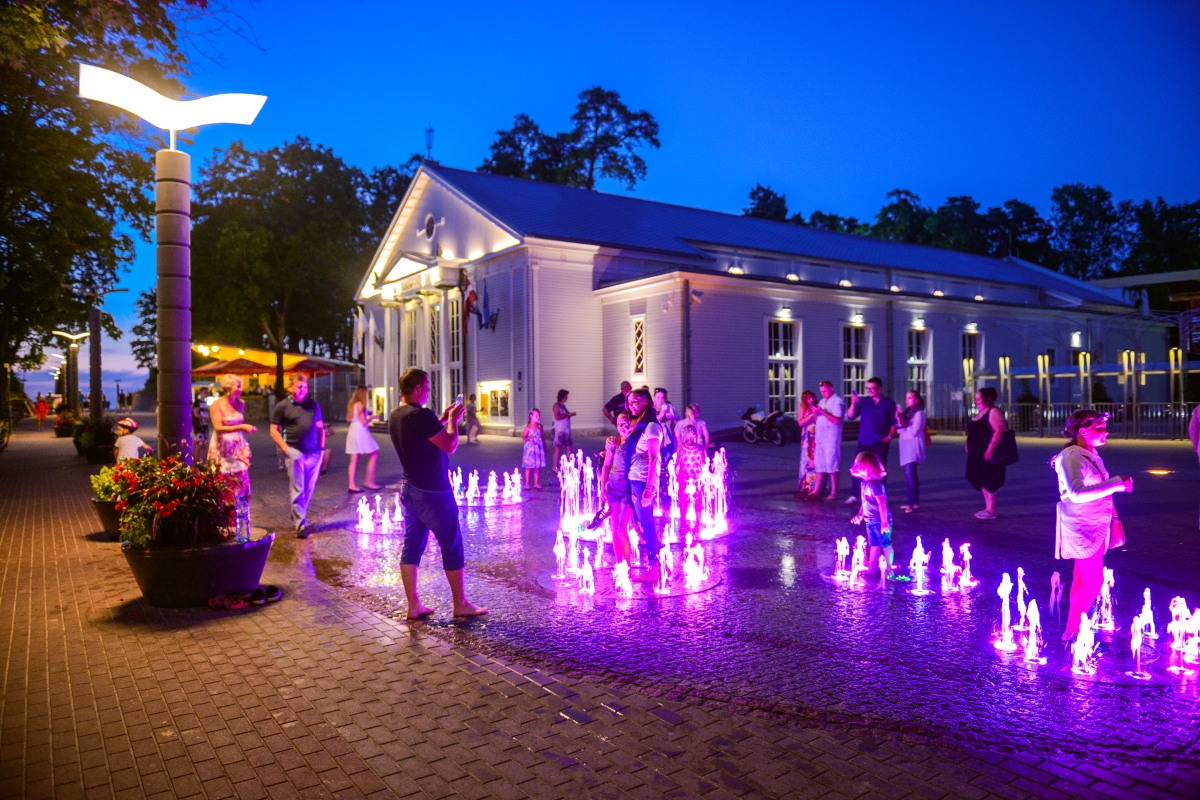


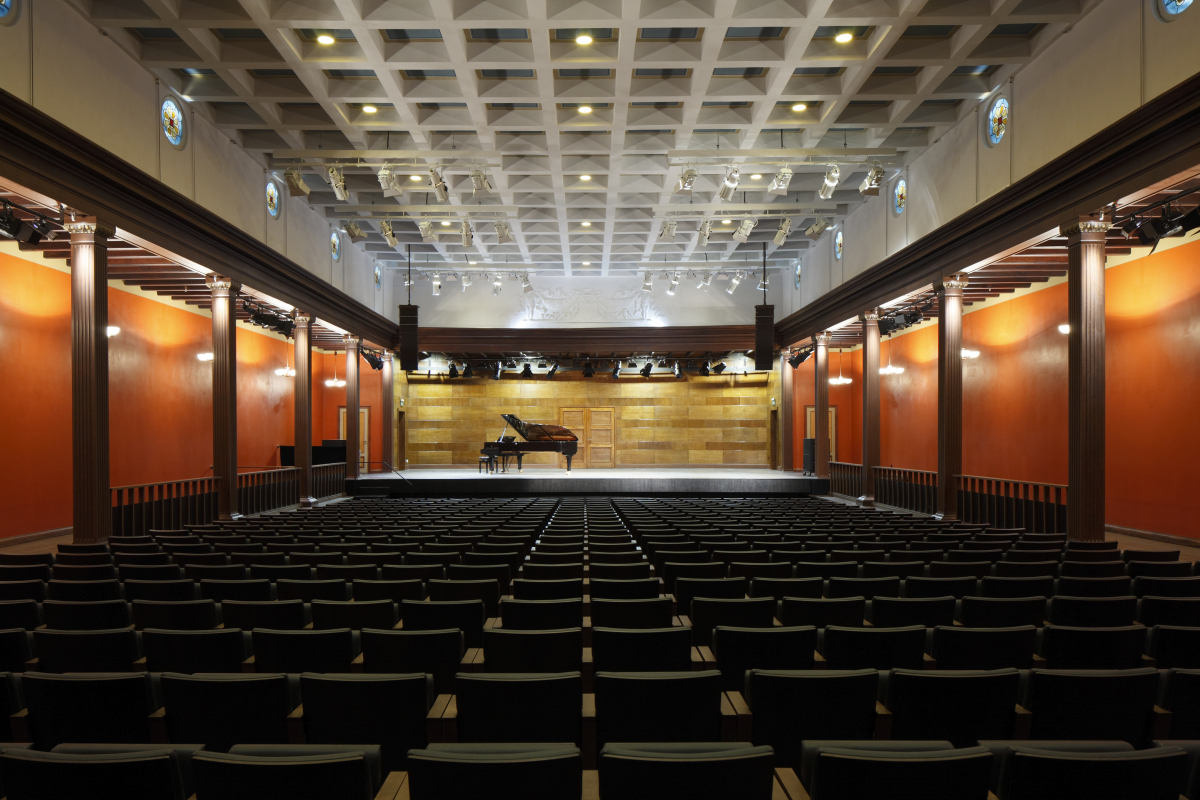
Dzintari Concert Hall is one of Latvia’s most important concert venues and one of Jūrmala’s most recognisable cultural and architectural landmarks. Its distinctive character is shaped by a high-quality music programme, its proximity to the sea and pine park, and the architectural layers of several periods: the 1930s wooden concert hall, the post-war modernist summer auditorium and the 21st-century additions. The venue hosts classical, jazz and popular music concerts, festivals, competitions and other major international cultural events.
From the Edinburgh Concert Garden to Dzintari Concert Hall
Concert life at this location began in the late 19th century, when the Edinburgh Concert Garden occupied the site of the present-day concert hall. At the time, Jūrmala was developing rapidly as a resort, and summer recreation became increasingly intertwined with concerts, dances and social life.
By the beginning of the 20th century, Edinburgh had become one of Jūrmala’s leading centres of musical life. Orchestras from Berlin, St Petersburg and Warsaw performed here, and the Edinburgh Symphony Orchestra was established. During the 1930s, the Latvian Radio Symphony Orchestra, conducted by Arvīds Pārups, played an important role in the programme. Its concerts were also broadcast live on the radio, strengthening Dzintari’s place in Latvia’s musical life.
Architecture Across Three Eras
In 1936, an enclosed concert hall with approximately 690 seats was built to a design by architects Aleksandrs Birzenieks and Viktors Mellenbergs. The building is a notable example of interwar resort architecture, combining elements of Neo-Eclecticism, National Romanticism and Art Deco. Today it is known as the Small Hall of Dzintari Concert Hall and hosts concerts throughout the year.
In 1960, a new covered summer auditorium for approximately 2,000 spectators was opened alongside the historic building. It was designed by architect Modris Ģelzis in collaboration with engineer Andris Bite and acoustician Alberts Vecsīlis. The open-air hall is one of Latvia’s most striking examples of post-war modernist architecture. Its light roof structure, slender metal supports and openness towards the surrounding pine park create a space in which architecture, landscape and sound merge into a unified experience.
In the 21st century, the concert hall complex was expanded with a glazed entrance pavilion, enlarged public areas, underground facilities, artists’ rooms and a landscaped park. Designed by the architectural practice Jaunromāns and Ābele, the new additions respect both the historic wooden hall and Modris Ģelzis’s modernist architecture.
Ansis Cīrulis’s Wall Paintings
The foyer of the historic concert hall contains the preserved wall paintings Lielupe, Sea and Latvia by the Jūrmala-born artist Ansis Cīrulis, created when the building was completed in 1936. They reflect the artist’s characteristic use of Latvian ornament, motifs inspired by nature and the sea, and the aesthetics of the Latvian national style.
The paintings were overpainted in the 1960s, but were restored in 2016 and can once again be viewed in the concert hall’s interior. They are an important example of Latvian monumental art and an integral part of the cultural and historical value of Dzintari Concert Hall.
Part of Latvian and International Musical Life
For decades, Dzintari Concert Hall has been one of Latvia’s most important music stages. Leading Latvian soloists, conductors and ensembles perform here regularly, while the venue’s international reputation has been shaped by world-renowned artists and orchestras.
The stage has welcomed the Royal Concertgebouw Orchestra, the London Symphony Orchestra, the Vienna Philharmonic and the Israel Philharmonic Orchestra, as well as conductors Riccardo Muti, John Eliot Gardiner, Daniel Harding and Zubin Mehta. Internationally acclaimed soloists who have performed here include Elīna Garanča, Renée Fleming, Joshua Bell, Yuja Wang, András Schiff, Jan Lisiecki, Mischa Maisky and Chris Botti.
Festivals and Traditions
Festivals, competitions and annual concert traditions form an important part of the identity of Dzintari Concert Hall. Since 2015, the venue has hosted the Jūrmala Festival, bringing together Latvian and international artists in programmes of symphonic music, chamber music and special events held both in the city and by the sea.
The concert hall also regularly hosts the International Hans Gabor Belvedere Singing Competition, the International Baltic Sea Choir Competition, jazz concerts, ballet programmes and Maestro Raimonds Pauls’s annual concerts. These traditions demonstrate that Dzintari Concert Hall is not only a historic landmark but also a vibrant and internationally active cultural institution.
Part of the Latvian Cultural Canon
Dzintari Concert Hall is included in the Latvian Cultural Canon in the field of architecture and design. Its value lies in the unique combination of architectural layers from different periods: 1930s wooden architecture, post-war modernism and contemporary 21st-century additions.
Dzintari Concert Hall is not only one of Latvia’s most significant examples of public architecture but also an integral part of Jūrmala’s cultural landscape and the history of music in Latvia.
Tuvākie pasākumi
- https://dzintarukoncertzale.lv/
- https://dzintarukoncertzale.lv/
- https://dzintarukoncertzale.lv/
- https://dzintarukoncertzale.lv/
- https://dzintarukoncertzale.lv/
- https://dzintarukoncertzale.lv/
- https://dzintarukoncertzale.lv/
- https://dzintarukoncertzale.lv/
- https://dzintarukoncertzale.lv/
- https://dzintarukoncertzale.lv/
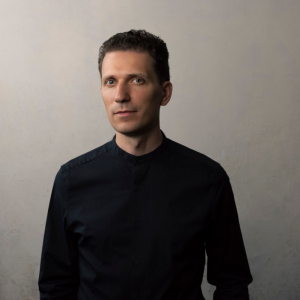
Christmas Festival. Reinis Zariņš. Messiaen’s Twenty Contemplations on the Infant Jesus | Dzintari Concert Hall
At the Christmas Festival concert, pianist Reinis Zariņš will perform French composer Olivier Messiaen’s piano cycle Twenty Contemplations on the Infant Jesus.
The twenty-part cycle is dedicated to the theme of the birth of Christ, combining religious symbolism, meditation and emotionally diverse musical expression. Monumental and ecstatic passages alternate with quieter, contemplative sections.
The concert lasts 2 hours without an interval.
Tickets can be purchased here.
Jūrmala Resident Card: 50% discount on the ticket price. When purchasing a ticket, the Jūrmala Resident Card number must be entered.
Close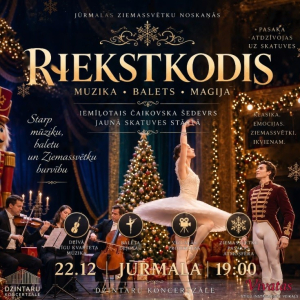
The Nutcracker “Between Music and Fairy Tale” | Dzintari Concert Hall
In the performance “The Nutcracker. Between Music and Fairy Tale”, the classic Christmas story is brought to life through live music and ballet. The performance features soloists and musicians of the Latvian National Symphony Orchestra, as well as soloists and ballet dancers of the Latvian National Opera and Ballet.
After the performance, children can receive a festive gift from a ballet dancer. The gift costs EUR 18 and must be purchased separately.
The event lasts 1 hour and 30 minutes without an interval.
Tickets can be purchased here.
Jūrmala State City Municipality is not the organiser of the event and is not responsible for its content, conduct, quality, or the accuracy of the information provided by the organisers.
Close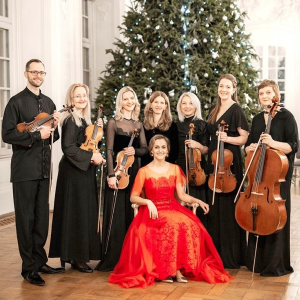
Christmas Festival. “Sonore Antiqua” and Gunta Gelgote | Dzintari Concert Hall
The Christmas Festival baroque music concert will feature soprano Gunta Gelgote and the early music ensemble “Sonore Antiqua”.
The programme will include works by Arcangelo Corelli, Antonio Vivaldi, Georg Philipp Telemann, George Frideric Handel and Johann Sebastian Bach, including Corelli’s Concerto grosso, Bach’s Fifth Brandenburg Concerto, Telemann’s concerto for two violins, as well as vocal works by Vivaldi and Handel.
Tickets can be purchased here.
Jūrmala Resident Card: 50% discount on the ticket price. When purchasing a ticket, the Jūrmala Resident Card number must be entered.
Close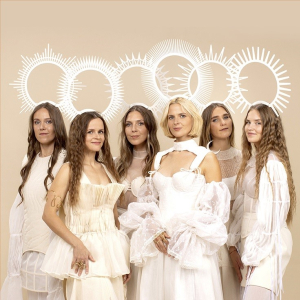
Christmas Festival. Tautumeitas | Dzintari Concert Hall
The Christmas Festival concert will feature the ethno-pop group “Tautumeitas” – Asnate Rancāne, Aurēlija Rancāne, Laura Līcīte, Gabriēla Zvaigznīte, Annemarija Moiseja and Kate Slišāne.
The group’s music combines the melodies and lyrics of Latvian folk songs with polyphonic harmonies, contemporary rhythms and electronic sounds. The visual identity of “Tautumeitas” blends traditional motifs with contemporary and futuristic aesthetics.
Tickets can be purchased here.
Jūrmala Resident Card: 50% discount on the ticket price. When purchasing a ticket, the Jūrmala Resident Card number must be entered.
Close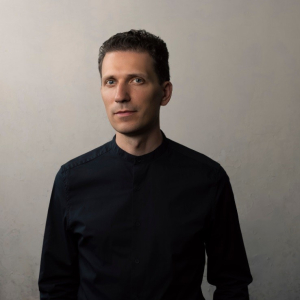
Christmas Festival. Pianist Reinis Zariņš | Dzintari Concert Hall
At the Christmas Festival concert, pianist Reinis Zariņš will perform French composer Olivier Messiaen’s piano cycle Twenty Contemplations on the Infant Jesus.
The twenty-part cycle is dedicated to the theme of the birth of Christ, combining religious symbolism, meditation and emotionally diverse musical expression. Monumental and ecstatic passages alternate with quieter, contemplative sections.
The concert lasts 2 hours without an interval.
Tickets can be purchased here.
Jūrmala Resident Card: 50% discount on the ticket price. When purchasing a ticket, the Jūrmala Resident Card number must be entered.
Close
Weekend Music. Matīss Žilinskis and Trio “Tresensus” | Dzintari Concert Hall
The concert programme features pianist Matīss Žilinskis and Trio “Tresensus” – kokle player Līga Griķe, saxophonist Aigars Raumanis and percussionist Uģis Upenieks.
The programme brings together the music of Arvīds Žilinskis and Matīss Žilinskis – works by Arvīds Žilinskis in new instrumentations, original music by Matīss Žilinskis, and the cycle “Childhood Scenes” arranged by Matīss. The concert will be hosted by Jānis Ozols.
The concert lasts 1 hour and 30 minutes without an interval.
Tickets can be purchased here.
Close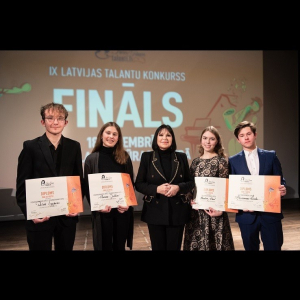
Final of the “Ineses Galantes Talanti 2026” Competition | Dzintari Concert Hall
The final of the “Ineses Galantes Talanti 2026” competition will feature young vocalists and instrumentalists in four categories: vocal performance, keyboard instruments, string instruments, and wind and percussion instruments. The competition will conclude with an awards ceremony for the laureates.
The final will take place on 28 November from 10.00 to 22.00 in the Small Hall of Dzintari Concert Hall. The detailed programme and participants’ performance times will be published on the competition website. Admission is free and prior registration is not required.
Jūrmala State City Municipality is not the organiser of the event and is not responsible for its content, conduct, quality, or the accuracy of the information provided by the organisers.
Close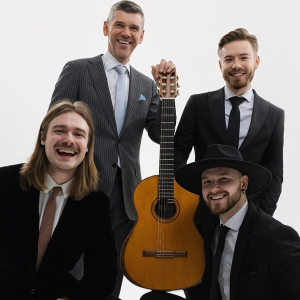
Weekend Music. Four Guitars. Zemītis, Zitmanis, Akots, Kupčs | Dzintari Concert Hall
The concert programme “Four Guitars” will feature the Riga Guitar Quartet – Kaspars Zemītis, Kārlis Matīss Zitmanis, Miks Akots and Kristens Kupčs. The programme includes Andrew York’s composition “Quiccan”, original works by the guitarists themselves, as well as music by Enrique Granados, Zigmars Liepiņš and Emīls Dārziņš, Latvian folk songs and excerpts from the musical The Sound of Music.
The concert will be hosted by Jānis Ozols. Duration: 1 hour and 30 minutes without an interval.
Tickets can be purchased here.
Close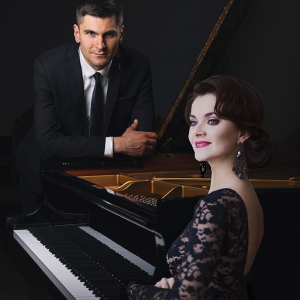
Elīna and Vestards Šimkus. Ir viens vakars | Dzintari Concert Hall
In the concert programme “Ir viens vakars”, soprano Elīna Šimkus and pianist Vestards Šimkus will perform works of Latvian vocal lyricism.
The programme includes compositions by Jāzeps and Jānis Mediņš, Emīls Dārziņš, Jāzeps Vītols and Ēriks Ešenvalds, as well as original works by Vestards Šimkus for voice and piano.
The concert has been created in cooperation with the Ministry of Culture of the Republic of Latvia and VSIA “Latvijas koncerti”.
Concert duration: 1 hour and 10 minutes, without an interval.
Tickets can be purchased here.
Jūrmala State City Municipality is not the organiser of the event and is not responsible for its content, conduct, quality or the accuracy of information provided by the organisers.
Close
Ieva Kerēvica and the Latvian Radio Big Band. An Evening of Zigmars Liepiņš’s Music | Dzintari Concert Hall
Artists:
Ieva Kerēvica – vocals
Latvian Radio Big Band
The Latvian Radio Big Band, together with vocalist Ieva Kerēvica, presents a concert programme dedicated to the music of Latvian composer Zigmars Liepiņš, ranging from songs by the group “MODO” from the 1970s to music for film and theatre.
Liepiņš’s compositions will be presented in new big band arrangements. The programme includes songs by “MODO” as well as well-known melodies from films and theatre productions.
The programme was conceived by Ieva Kerēvica, who also performs as the featured vocalist. The arrangements were created by Ritvars Garoza, Madars Kalniņš and Kārlis Vanags.
The concert celebrates Latvia’s musical heritage and highlights the diversity of Zigmars Liepiņš’s work across different periods and genres.
Tickets can be purchased here.
Close