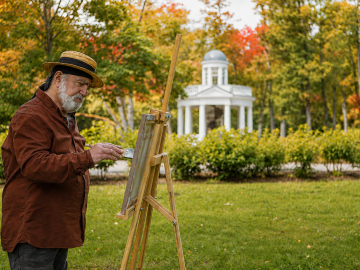
Kauguri Beyond the Postcard: A City Within a City

Kauguri is a part of Jūrmala worth discovering beyond the city’s familiar resort routes. Home to around a third of Jūrmala’s residents, the neighbourhood has a rhythm and character of its own, with a lively centre, two markets, a park, a cultural centre and a beach of its own. In many ways, it really does feel like a city within a city.
Beyond the Familiar Jūrmala Postcard
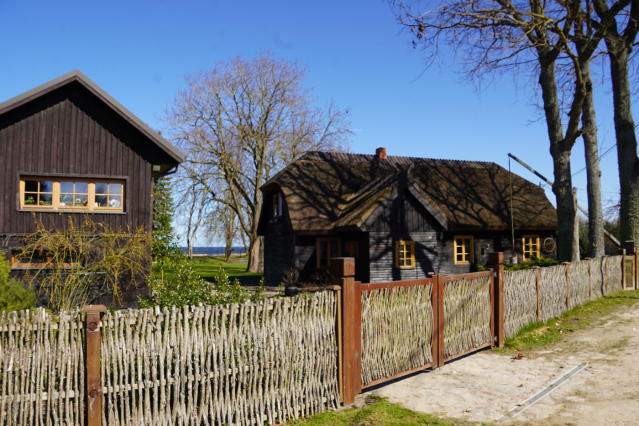
The character of Kauguri is best revealed through contrasts. Residential neighbourhoods, a busy urban centre and a contemporary park lie only a few minutes away from the winding streets of historic Kaugurciems, with its old wooden houses and shoreline.
The closer you get to the sea, the more traces of the former fishing village begin to appear in the urban landscape. Kaugurciems has preserved its irregular street pattern and fragments of historic architecture to this day, offering a very different perspective on Jūrmala from the elegant resort villas and promenades usually associated with the city.
A Place with a Surprisingly Long Memory
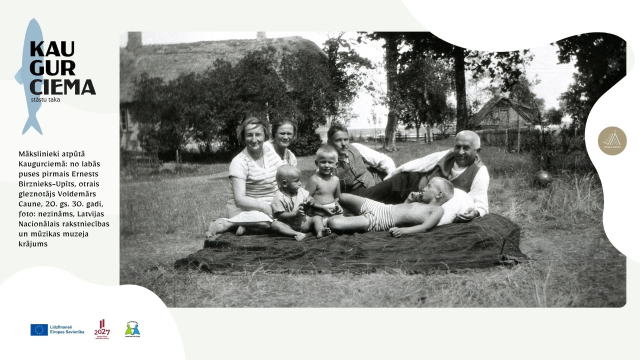
Kaugurciems has a history stretching back centuries. During the reign of Jacob, Duke of Courland, a harbour and warehouses were established here. Later, members of the Courland nobility and residents of Jelgava began spending their summers by the sea, and some of the earliest bathing visitors to Kauguri are recorded as far back as around 1809.
In 1919, the quiet coastal village became one of the battle sites of the Latvian War of Independence. The Battle of Kaugurciems is still commemorated by a monument near the sea dedicated to Captain Paulis Zolts and his soldiers. Within just a few kilometres, Kauguri brings together an unexpectedly rich cross-section of Latvian history.
Discover Kaugurciems with an Audio Guide
One of the best ways to uncover the less visible layers of Kaugurciems is on foot. The Kaugurciems Story Trail audio guide follows a route of approximately four kilometres through the historic neighbourhood and takes up to 90 minutes to complete.
Along the way, it introduces stories that might otherwise remain unnoticed – from the everyday life of fishing families and old roads to significant historical events. It is the kind of walk after which an apparently ordinary street no longer seems quite so ordinary.
Kauguri Beach – Where Local Life Meets the Sea
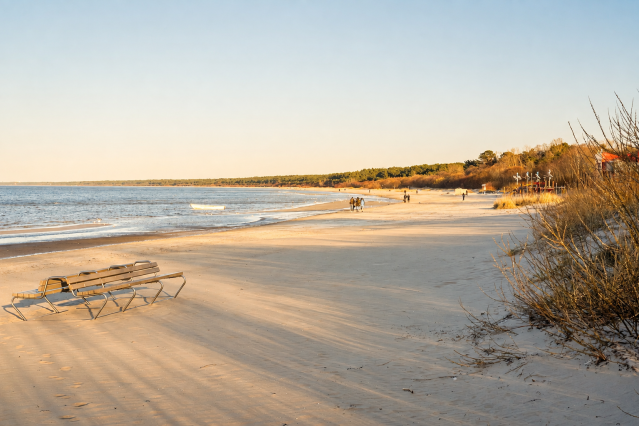
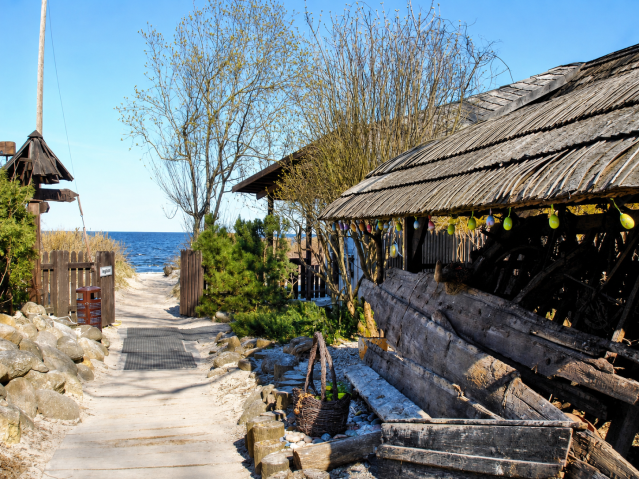
The seaside in Kauguri also feels slightly different from other parts of Jūrmala. Here, there is no broad belt of forested dunes separating the town from the beach. The historic buildings of Kaugurciems reach close to the coast, and traces of the former fishing village can still be spotted in local yards and streets. It is a beach where Jūrmala’s familiar resort identity meets the rhythms of everyday local life.
Kūriņš – Almost a Kaugurciems Institution
Close to the beach stands Kūriņš, a restaurant that many Jūrmala residents regard as much more than simply a place to eat. Its traditional fishing-farmstead atmosphere, generous food and loyal year-round clientele have made it one of the most recognisable places in Kaugurciems.
For visitors who want to experience Kaugurciems as a living neighbourhood rather than a historic backdrop, Kūriņš is well worth a stop.

Two Markets, Two Sides of Kauguri
The everyday character of Kauguri can also be discovered through its markets. Kauguri Market on Nometņu iela is unmistakably local, with seasonal vegetables, berries, herbs, mushrooms, textile stalls and the bustle of a traditional neighbourhood market.
Nearby, Līgo Bazārs offers a more contemporary take on the market experience, with bread, dairy products, meat, fruit and vegetables, delicacies and flavours from different cuisines. The two places are very different, yet complement each other – and together they reveal a great deal about everyday life in Kauguri.
From the “Mezgls” Sculpture to Kauguri Park
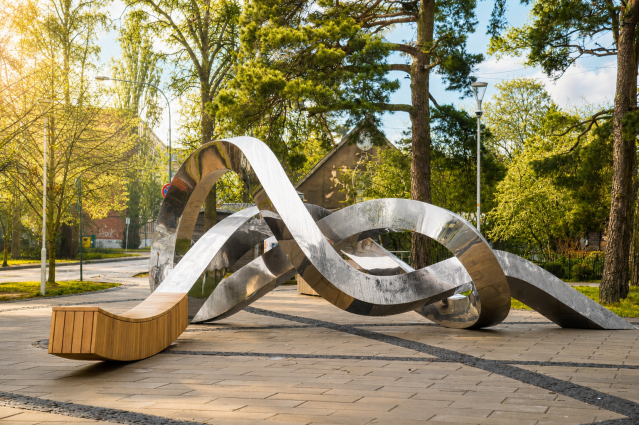
Near the Kauguri Cultural Centre, look out for the public artwork “Mezgls” (“The Knot”). Its form refers to the traditional fishing skill of tying knots while also symbolically connecting a place where a church, market, cultural centre and the everyday routes of residents intersect.
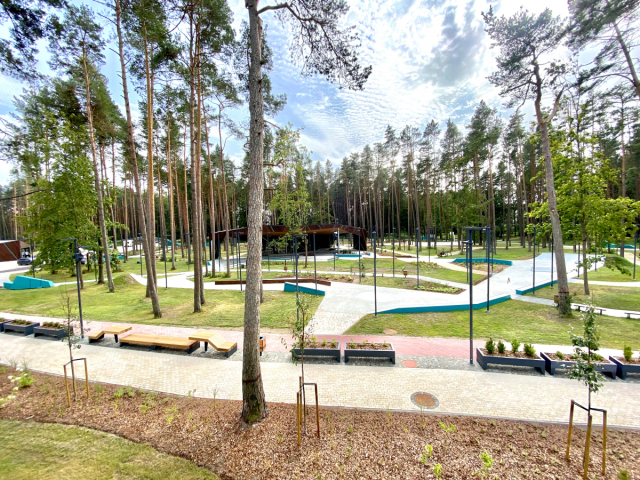
A short distance away is the 3.8-hectare Kauguri Park, a contemporary public space with a skatepark, sports and children’s playgrounds, landscaped green areas and a Youth House.
Kauguri is worth exploring in its own right. Walk down to the beach, wander through historic Kaugurciems, follow the audio trail, browse both markets, discover the “Mezgls” sculpture and spend some time in Kauguri Park.
Kauguri does not fit the conventional postcard image of Jūrmala. It reveals itself through a rhythm of its own – between coastal history, bustling markets, residential neighbourhoods and places where traces of the former fishing village can still be felt.