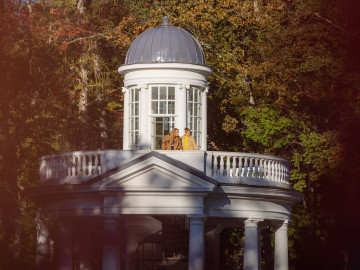
Where to See Autumn Colours in Jūrmala: Parks, Forests and Nature Trails

Does autumn in Jūrmala first make you think of the sea? Take just a few steps away from the beach and a completely different landscape unfolds – the bend of the Lielupe River and its meadows, historic parks, diverse tree collections and near-primeval forests. Where should you go to experience Jūrmala’s changing autumn colours?
Ragakāpa Nature Park
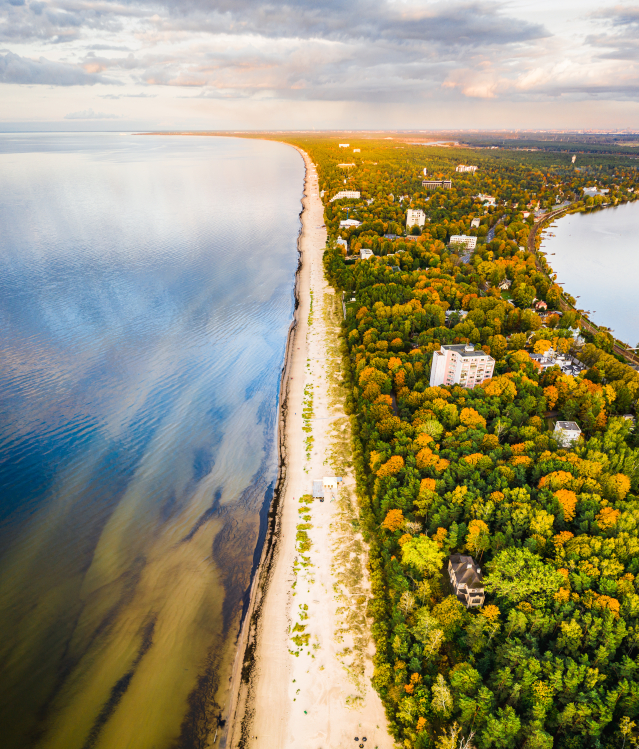
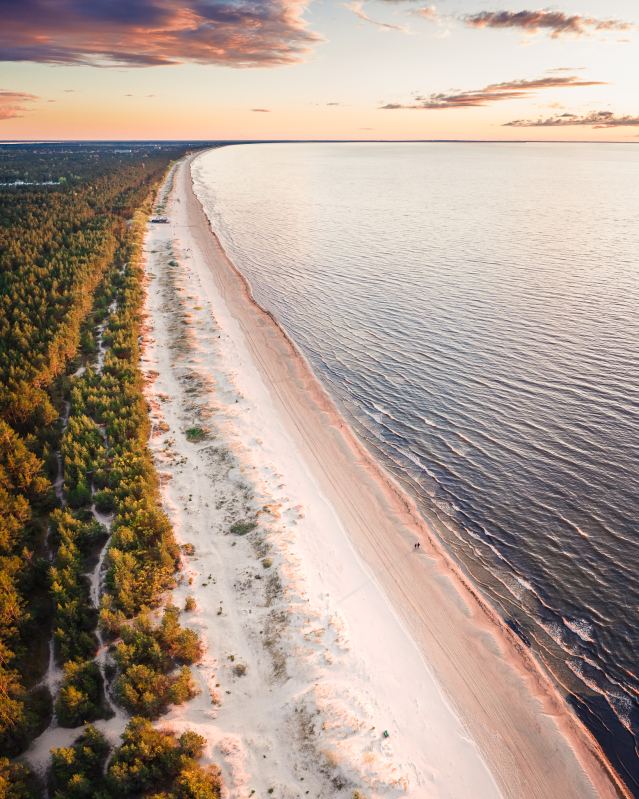
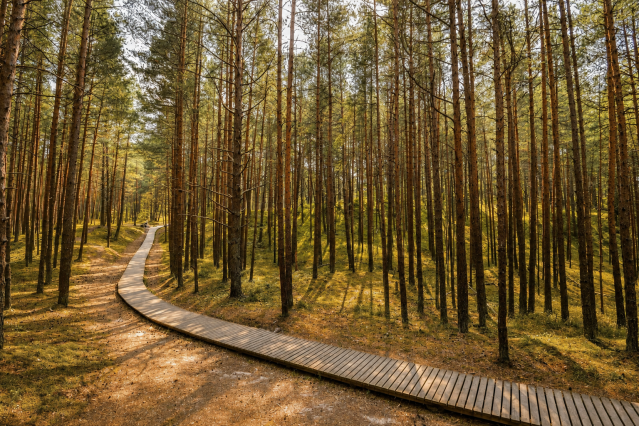
At the beginning of a walk through Ragakāpa, autumn can remain almost imperceptible – the ancient pine forest retains its deep green colour. The change of season becomes visible as you emerge onto the beach near the mouth of the Lielupe, where the willows along the shore turn yellow and gold, forming a transition between the evergreen pine forest and the pale coastal sands.
Bulduri Dendrologic Garden
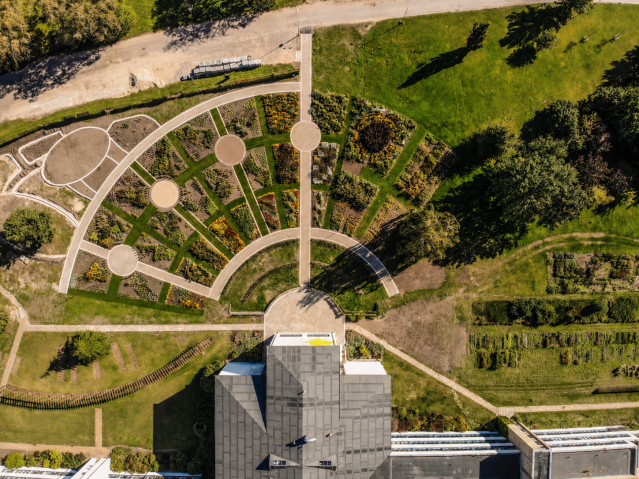
The diversity of species means that the garden does not change colour all at once or in a single shade. Its grounds cover more than 14 hectares and contain around 800 trees, including rare species and trees of national importance. Evergreen conifers mingle with golden and russet foliage, while the labels beside the plants turn the changing colours into a botanical story.
The Bend of the Lielupe in Dubulti
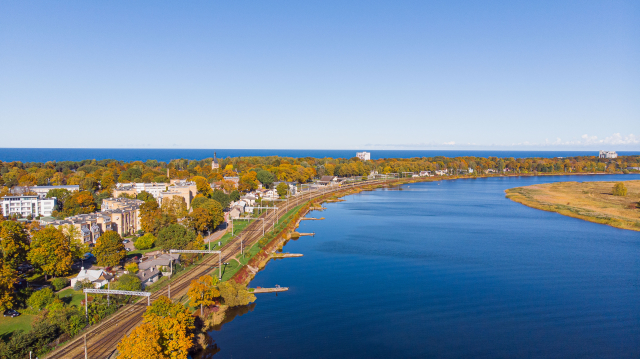
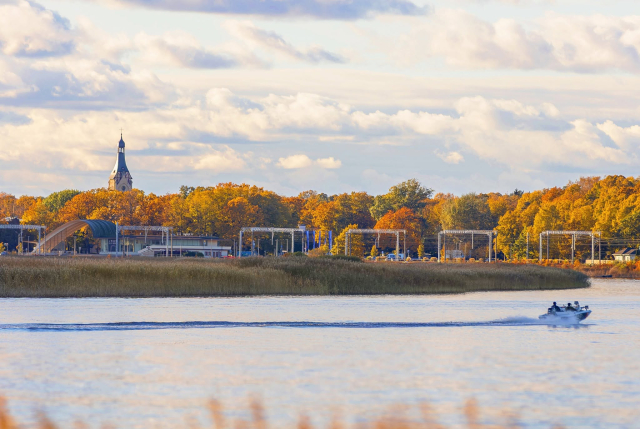
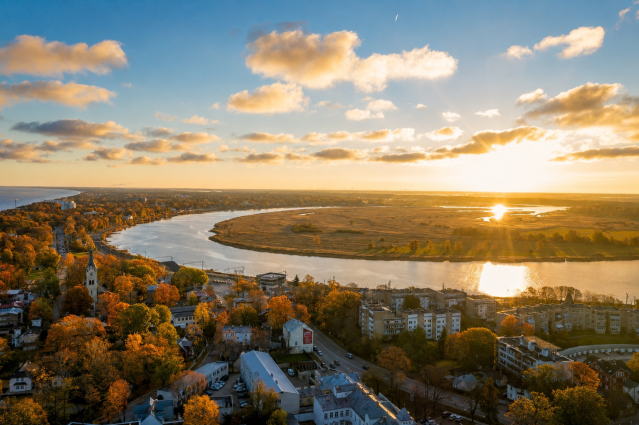
One of Jūrmala’s most distinctive views opens up from Dubulti railway station – its wave-shaped concrete shell frames a panorama of the bend in the Lielupe and the broad meadows beyond. Here, autumn is defined not by a canopy of leaves but by the golden and russet tones of the meadows, the surface of the river and the changing light. Occasionally, morning mist transforms the scene, causing the line of the river and the meadows to almost disappear.
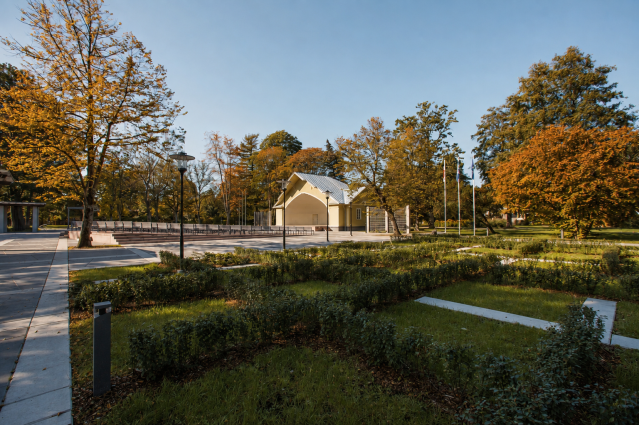
Melluži Open-Air Stage and Park
The landscape around the Melluži open-air stage was conceived as a clear geometric pattern that gradually dissolves into the historic park. Tinted concrete slabs give way to lines of clipped shrubs and beds of perennials. In autumn, fallen leaves add another layer to the composition, while rain deepens the pinkish-violet and grey tones of the paving. The pond and fountain bring reflections into the scene, and the park paths allow this compact composition to be viewed from different angles.
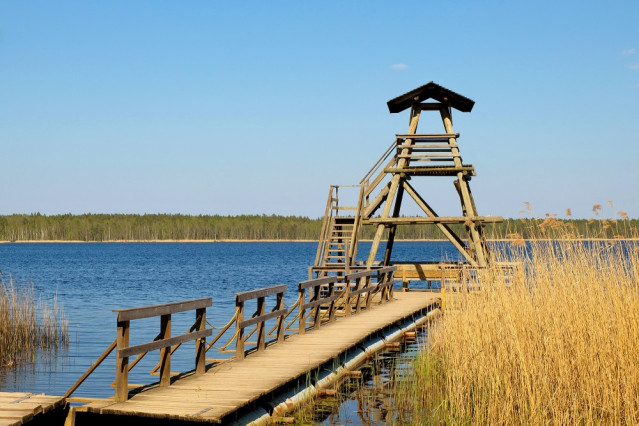
Sloka Lake Walking Trail
Around Sloka Lake, the autumn landscape takes shape between forest and water. The trail winds through different types of woodland and continues over wooden boardwalks in wetter sections, while the surface of the lake adds another dimension to the changing colours. The observation tower offers a broader view of the interplay between forest and lake.
Black Alder Swamp Boardwalk
The boardwalk beside the Ķemeri National Park information centre “Meža māja” leads through the Vēršupīte floodplain forest, dominated by black alder but also home to aspen, oak and ash. Dark trunks, the scent of damp woodland, reflections on the water and changing foliage create a mysterious, almost primeval landscape.
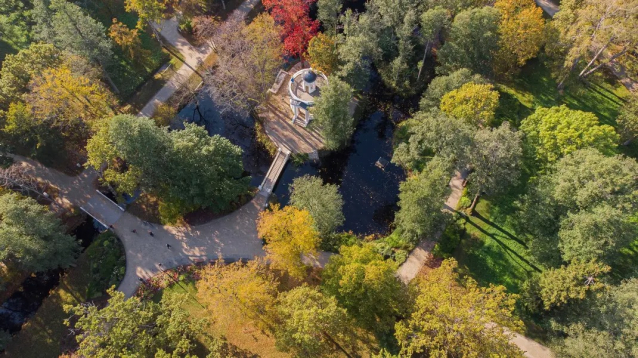
Ķemeri Resort Park
Designed by Riga landscape gardener Kārlis Heinrihs Vāgners, Ķemeri Resort Park was first laid out in 1839. It is the oldest and largest public garden in Latvia outside Riga. In autumn, look beyond the reflections in the Vēršupīte and take time to notice the park’s trees. Among them are two Manchurian walnut trees, whose leaves can grow to more than a metre in length and turn yellow in autumn. The larger of the two – known locally as the Great Ķemeri Walnut Tree – has powerful branches that curve almost to the ground. The park is also home to Young’s weeping birches, silver maples, common hornbeam, oaks, black alder and false acacia.
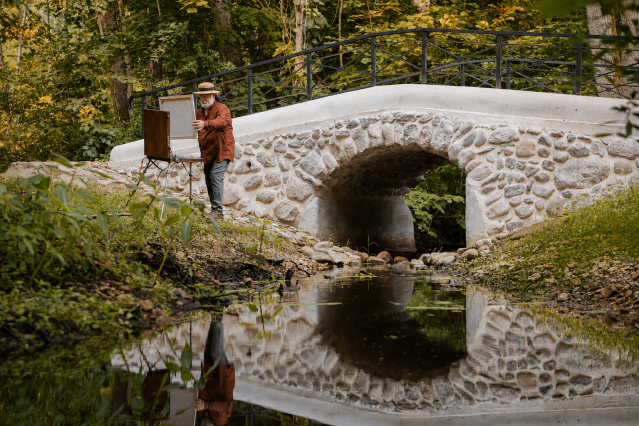
Ķemeri Forest Park
Beyond the resort park, the historic network of paths continues into Ķemeri Forest Park, winding through the woods and along the Vēršupīte. The two restored historic stone masonry bridges are more than picturesque landmarks – they are architectural monuments of national importance. In autumn, rough stone, dark water, moss and fallen leaves accentuate the transition from the carefully composed resort park to a freer woodland landscape.
Which of these landscapes will you choose for your autumn walk?